
The Fire and the Rose
St. Catherine of Siena

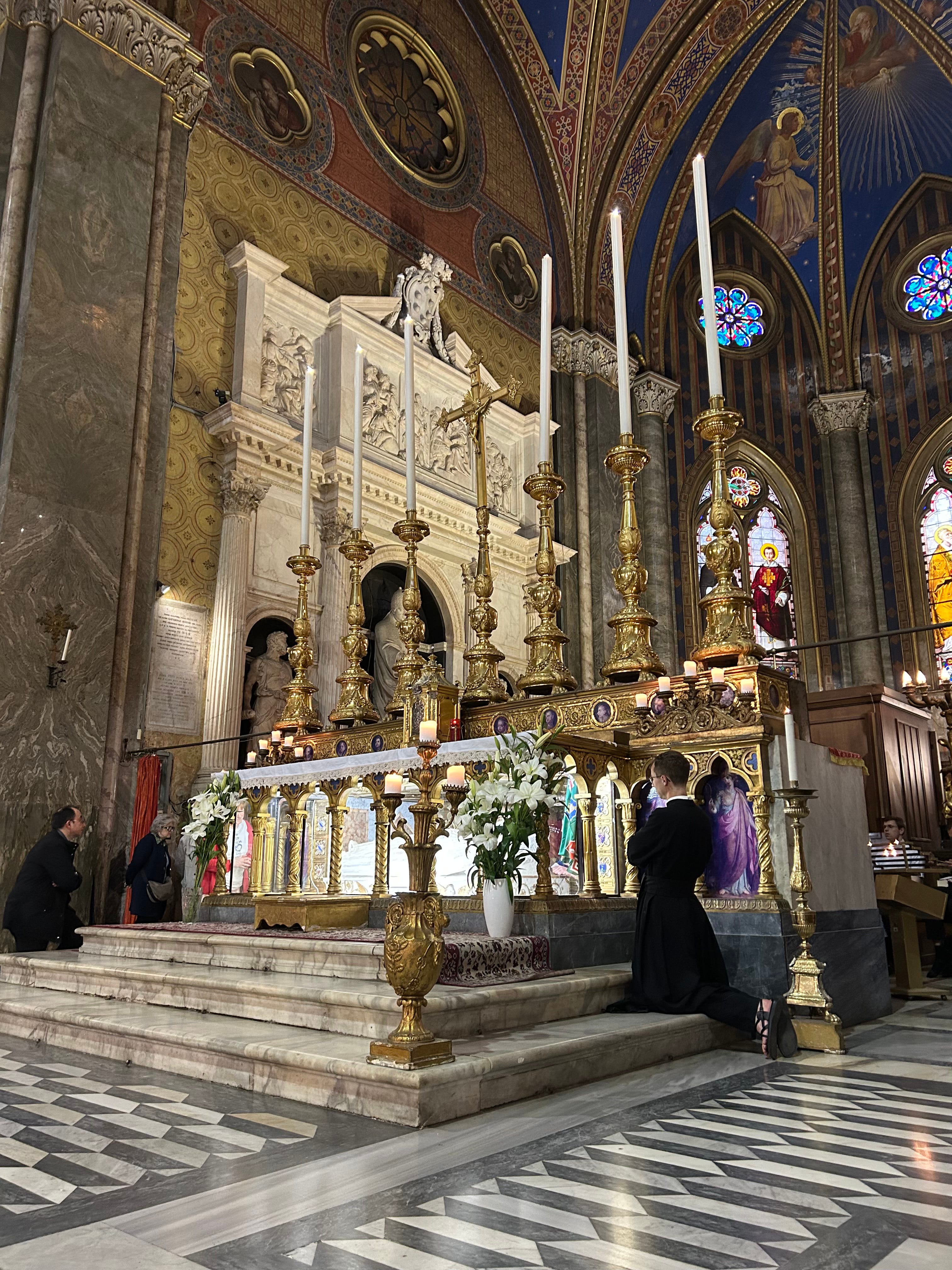
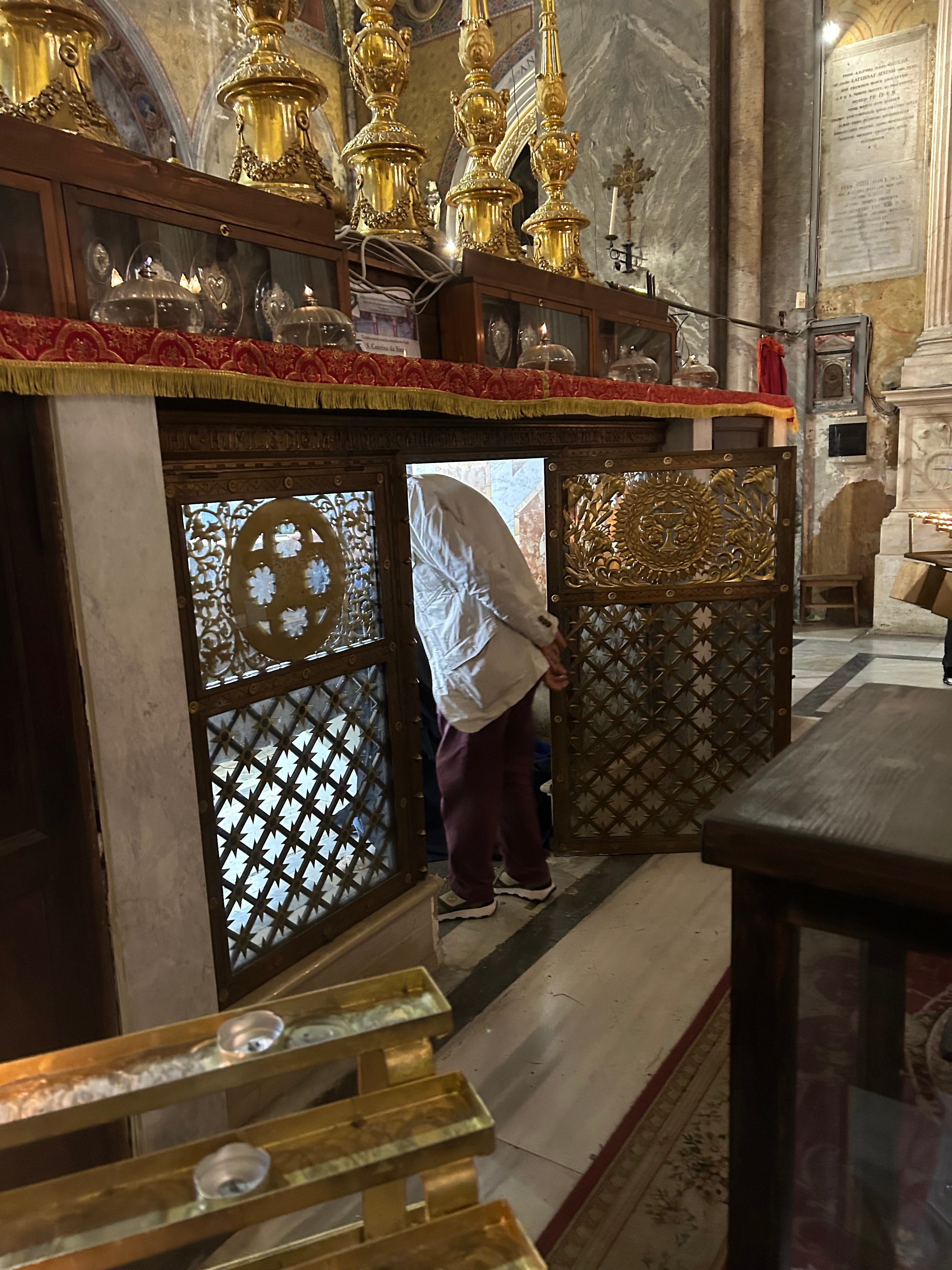
My photo of St. Catherine of Siena’s tomb in Santa Maria Sopra Minerva, April 29th, 2025. For her feast day, they opened the glass casing in the back and allowed people to step inside and pray at the marble sarcophagus
It is Providential that we have the feast day of St. Catherine of Siena, April 29th, falling right during the Interregnum. Anyone concerned about the election of a new Pope and the direction of the Catholic Church, progressive or conservative, would do well to stop reading about “papabile” and pick up a book on St. Catherine of Siena. It will give you some perspective.
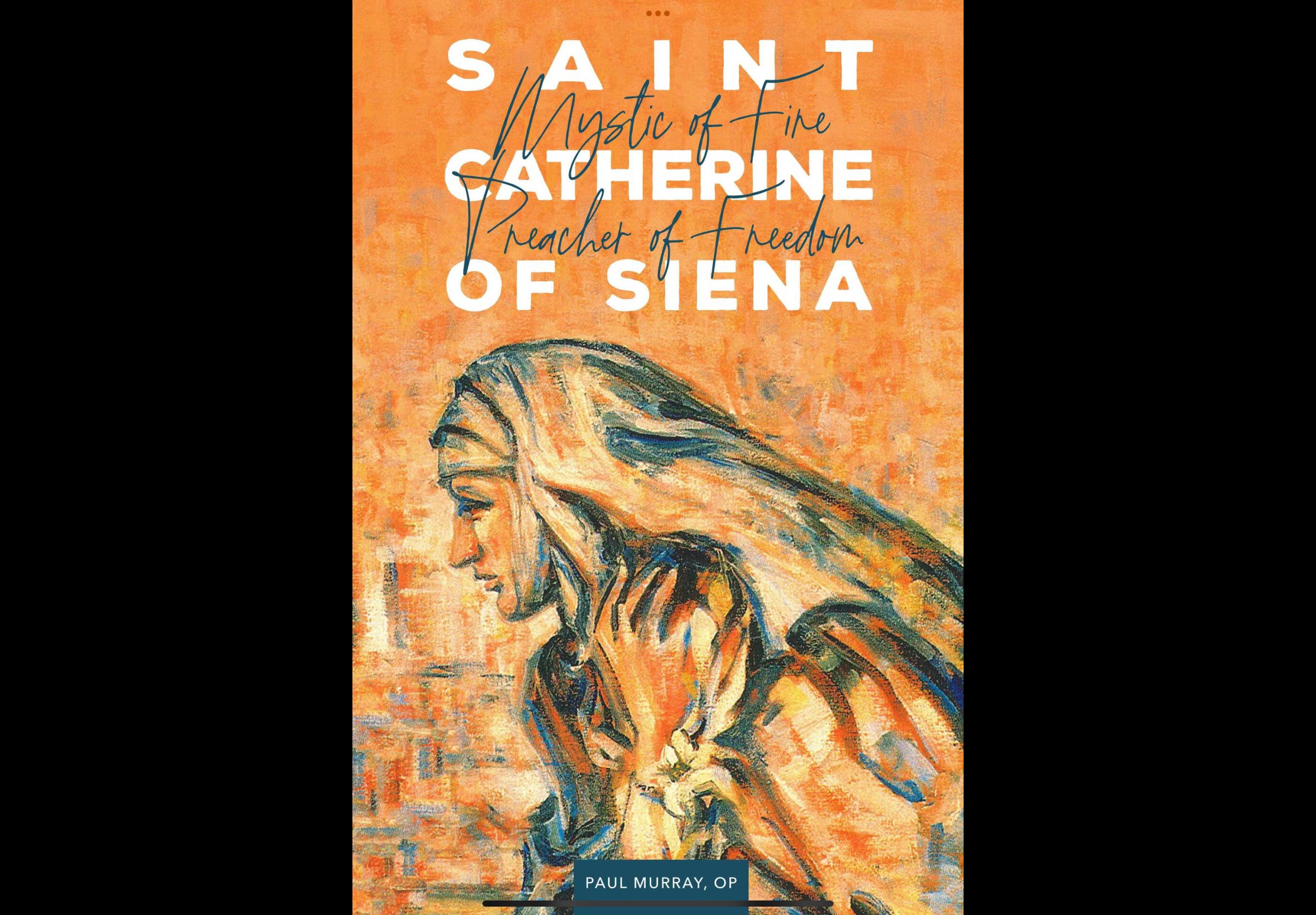
I am relying for this article on the book, St. Catherine of Siena: Mystic of Fire, Preacher of Freedom by the wonderful Fr. Paul Murray, op, published by Word of Fire.
Here is Catherine’s description of some priests in the year 1378:
“They are more like lawyers who give off a filthy stench and a wretched example than like clerics or canons who ought to be flowers and mirror of holiness…filthy, greedy, avaricious dealers bloated with pride, who are selling and buying the graces and gifts of the Holy Spirit.”
What’s even more marvelous about this description is that Catherine was writing it to a Pope!
“At least, Most Holy Father,” she wrote to Urban VI, “let Your Holiness get rid of their disordered living, their wicked practices and habits. Please discipline them, Your Holiness, each according to his rank and according to what divine goodness requires of him.”
Catherine was living in a time of the Black Plague and a divided Church which would ultimately fracture during the Great Schism of 1378. The papacy was in Avignon, and she is widely credited with influencing Pope Gregory XI to return to Rome.
“Let it please your holiness to hurry!” she writes to Gregory. “Make use of a holy trick. I mean, let it look as if you are going to take a few more days, and then all of a sudden go!”
What I find so unique about Catherine is that she was an imminently practical woman, fearlessly dispensing advice to friends, Queens and Popes and yet she was also a mystic with a profound contemplative life.
Blessed Raymond of Capua, who was her spiritual director, said this of Catherine:
“What a fascination she exercised!”
“My heart overflows as I recall it and compels me to record here this mysterious attraction which was part of her. It made itself felt, not only by her spoken word, but by the very fact of one being present where she was. By it she drew the souls of men to the things of God and made them take delight in God himself. She drove out despondency from the hearts of any who shared her company and banished dejection of spirit and all feelings of depression bringing instead a peace of soul so deep and so unwonted that those who experienced it did not know themselves.”
Blessed Raymond says when she was absorbed in prayer “Catherine was habitually rapt out of her bodily senses by the force of her contemplation of the things of God, so that her very body, also, was frequently raised aloft in ecstasy and there, with the angelic spirits, she joined with the praises of the Lord.”
Of these experiences, Catherine writes to Raymond:
“I’m not writing to you about what God has done and is still doing because there is no language or pen up to the task.”
“The supreme eternal Word and exalted Godhead gave me such joy that even the parts of my body felt as if they were melting, disintegrating like wax in the fire.”
“When these powers are gathered and united all together and immersed and set afire in me, the body loses its feeling. For the eye sees without seeing; the ear hears without hearing; the tongue speaks without speaking…the hand touches without touching; the feet walk without walking. All the members are bound and busied with the bond and feeling of love.”
Catherine had never received a formal education, she did not even know how to read and Raymond of Capua says she taught herself. It seems clear that the force of intelligence which she possessed and her courage of expression could only have been rooted in these mystical experiences.
In the modern world, we tend to dismiss mystics as some strange phenomenon of primitive people, but Catherine of Siena shows that we must not make the mistake of thinking we are so different or more sophisticated than our ancestors in the 13th century.
Catherine’s letters show that even if the language is slightly different, the problems are not. Consider this letter to a depressed nun called Sister Costanza:
“I mean when notions come into the heart that say, “What you are doing is neither pleasing nor acceptable to God; you are in a state of damnation.” And little by little, after these notions have caused discouragement, they infiltrate the soul and point out a way disguised as humility, saying, “You can see that because of your sins you aren’t worthy of many graces and gifts” and so the person stays away from communion and from other spiritual gifts and practices. This is the devil’s trick, the darkness he causes.”
Catherine was ahead of her time as a proponent of self-knowledge and even seeing the shadow-side of the self, as Carl Jung would centuries later make famous. (There is a wonderful chapter on Jung and Catherine in Murray’s book).
“Don’t be afraid of your own shadow,” is a phrase Catherine used many times, according to Murray.
“Let’s not put off any longer our move into this holy dwelling of self-knowledge,” she writes to a friend. “We so need this and it is so pleasant for us – because God’s boundless infinite goodness is there.”
“If we do not see our own darkness we cannot know the love and light of divine goodness.”
Whenever we speak of women in the Church and “progress” we would do well to remember St. Catherine of Siena. She was neither a nun nor a Vatican official but her influence was greater than any position of power she might have held.
If you think we live in uncertain times, take solace that the Catholic Church has seen it all before and perhaps much worse.
St Catherine of Siena’s time was deeply divided and corrupt (there was even an anti-Pope! Read about Avignon…) and yet she had the courage to write:
“My soul is jubilantly happy in this grief – because among the thorns I smell the fragrance of the rose about to open.”
Fire was an image which Catherine used extensively to describe her mystical experience of God and this image of the fire and the rose calls to mind TS Eliot’s wonderful closing lines of the Four Quartets.
I do not know if TS Eliot ever read Catherine’s dialogues and letters but we do know he was influenced by Julian of Norwich, another medieval mystic just around the same time as Catherine, proving that there is something about these images and messages which speak to us no matter what era we are living through.
And all shall be well/All manner of thing shall be well/When the tongues of flame are in-folded/Into the crowned knot of fire/And the fire and the rose are one.
Any time an article requires me to stop reading and research a statement or point contained therein I learn or rediscover something, sometimes important and sometimes just interesting. I stopped many times reading this one.